Showing posts with label Friends. Show all posts

Wednesday, 30 July 2025

One Must Imagine Marty and John Happy: Two Strangers Discuss the Absurd in an Ambleside Pub

“Camus.” It wasn’t a question. I turned from the bar to find a man standing beside me. He nodded at the quotation emblazoned across my t-shirt.

“The struggle itself
towards the heights is
enough to fill a man’s
heart. One must
imagine Sisyphus
happy.”

The pub was almost empty. Mid-morning on a rainy Monday. More than a little damp my tweed jacket was draped over the back of my chair at a table in the middle of the room. I placed my order, a half of Swift Best (3.4% ABV) named for MV Swift, largest of the boats that plies the tourist routes on Windermere.

We introduced ourselves. It was immediately clear John knew a lot more than I do about Camus in particular and philosophy in general. A long-time interest on his part I think, whereas I only encountered Camus a couple of years ago. I was unaware of the philosopher’s lifelong interest in football, for example. Fortunately, I knew enough of his theories and writings to hold my own in what developed into a lively and engaging discussion.

John recommended a book by English existentialist philosopher and novelist Colin Wilson, noting that nowadays he uses it as a footrest when playing guitar. He mentioned music a couple of times and I wish I’d asked him about it. It’s clearly an important part of his life, as writing is to mine. I believe the book John was talking about is Wilson’s The Outsider. (“Through the works and lives of various artists, including Kafka, Camus, Hemingway, Hesse, Lawrence, Van Gogh, Shaw, Nietzsche and Dostoevsky, Wilson explored the psyche of the outsider, his effect on society and society’s on him.”) I’ve ordered myself a copy. As I don’t play guitar, I’ll probably read it.

Talk turned to Camus’ 1942 philosophical work The Myth of Sisyphus, from which my t-shirt quotation is taken. It was my introduction to the French-Algerian philosopher’s work. I know it well enough to have gleaned thoughts and ideas that resonate strongly with my own. Moving to Camus’ novels, I was happy we settled on the only one I’ve read in full. Published in 1942, the title of L’Étranger translates literally as “the foreigner” but the book has appeared in English editions as The Outsider (in the United Kingdom) and as The Stranger in the United States. It’s a dark tale but one I find compelling. I’ve read it in print, listened to it on audiobook, and watched an English-dubbed version of the 1967 Italian film Lo Straniero (The Stranger) directed by Luchino Visconti. John was unaware of the film and I was happy to recommend it to him.

Pausing our philosophical discussion, we touched on what had brought each of us to the Wateredge Inn that day. John was on a coach trip, though from where I don’t know. I shared that I was on vacation, staying a couple of miles away, and that I’d previously stayed in the Quaysiders Club apartments across the road and loved being able to walk to the pub of an evening. I mentioned it was one of my happy places and that I’ve blogged about it previously. I gave him a contact card with details of the blog and my social media accounts. I rarely have any cause to hand them out and was relieved to find a few in my wallet. John commented that as I’d written about happy places I could write about miserable places too. It’s an idea I might take up in the future.

He told me a story about a time he went to France with a group of friends. They stayed overnight somewhere in England — Seaford? — before crossing the Channel but everything went wrong and he hated the place because of it. In France, he met up with someone who spontaneously said of the same English town, “Oh I love that place!” We laughed and agreed it demonstrated the power of perspective. I’d add that our feelings about a place or situation are essentially arbitrary and can change — or be changed — in a moment.

This relates well to Camus’ theory of the absurd, which I summarised as a response to “mankind’s need to find meaning in a universe that doesn’t give a shit.” This seemingly bleak perspective is saved from nihilistic despair by recognising that we are free to find our own meaning and purpose. That day, for example. I’m no fan of heavy rain, but without it John and I wouldn’t have met. Likewise if I’d chosen a different t-shirt, stood further down the bar, or taken a phone call before ordering my drink. Serendipity? Happenstance? The universe doesn’t give a damn about my search for meaning or purpose, but I do. I choose to smile and call my life richer for meeting this stranger at the bar. My little bit of Camusian rebellion.

I could have stood talking with John for hours but at a certain point it felt right to bring the conversation to a close. We shook hands and I returned to my table, leaving John at the bar. A moment later, on a whim, I went back and asked for a photo and to confirm he was okay with me sharing it online. He was happy to agree. Later that day I posted the photo on social media with the following description.

This is John. We got chatting at the bar when he commented on my Albert Camus t-shirt. Brilliant conversation about Camus, his ideas and novels, other philosophers (of which John is far more knowledgeable than me), happy places, miserable places, expectations, blogging ... Thanks for the conversation, John. There’s a more than passing chance it will feature in a blog post in the none too distant future!

It led to a short discussion with my friend Cal regarding Camus’ L’Étranger and why The Outsider is a better English title than The Stranger. To be honest, I think both work, for different reasons. The principal character Meursault is certainly a societal outsider, unable to understand, relate to, or fake the responses considered appropriate by those around him. This is something I relate to, not least in his inability to express the expected level of grief at his mother’s death.

But the words strange and stranger are also highly relevant to the story, the latter both in the sense of increasingly strange and as someone you don’t know. Interestingly, the word “strange” appears just once in my English translation of the book. It’s elsewhere given as “queer” in the original sense of that word. At one point, Meursault refers to his own strangeness (queerness) and its impact on others. He’s talking here of his girlfriend Marie.

Then she said she wondered if she really loved me or not. I, of course, couldn’t enlighten her as to that. And, after another silence, she murmured something about my being “a queer fellow.” “And I daresay that’s why I love you,” she added. “But maybe that’s why one day I’ll come to hate you.”

To which I had nothing to say, so I said nothing.

The word is rendered as “strange” in Visconti’s 1967 film adaptation.

Then she said I that I was strange somehow and that she loved me because I was strange. But that maybe some day she would come to hate me for just that reason.

The story as a whole turns on Meursaut’s unpremeditated, almost accidental, murder of a man he’s never met before and knows nothing about. It occurs to me that John and I were no less strangers when we met at the bar of the Wateredge Inn than Meursault and the unnamed Arab he encountered on the beach of Algiers. The outcomes of the two meetings were, thankfully, very different.

I’m reminded of two quotations. The first is widely attributed to the Irish poet William Butler Yeats. “There are no strangers here; Only friends you haven’t met yet.” That’s very much how I feel about to my short encounter with John. The second is by Virginia Woolf from her novel The Waves.

Our friends – how distant, how mute, how seldom visited and little known. And I, too, am dim to my friends and unknown; a phantom, sometimes seen, often not.

This is a favourite of mine, reflecting as it does the essential strangeness of us all, even to those who believe they know us well. In all of this, there’s an echo of a conversation I had years ago in the toilet of a bar in Newcastle. The other guy instigated that conversation too, responding to what I had on my t-shirt at the time.

“So, where are your roots?”

It’s not every day you get asked a question like that in the gents’ toilet at Bar Loco. At least, it’s not every day I get asked that in the gents’ toilet at Bar Loco. Then again, I’m not there very often.

It was the t-shirt, of course. My American Roots t-shirt. Specifically, given I was standing at the urinal, the back of the shirt which asks WHERE ARE YOUR ROOTS? in sans serif caps.

Caught off-guard, mid pee, I stumbled for an answer. “Well,” I said, looking down at my chest. “I’m not American. The shirt is. It was a gift from my bestie in Maine. I’m from Liverpool.”

I can think of one more conversation with a stranger that was inspired by a t-shirt I was wearing. I was sitting in my then favourite coffee shop, Caffè Nero in Newcastle, before heading to a mental health event. A young guy at the next table noticed my t-shirt approvingly. “Fucking good shirt, man.”

All told, my conversation with John lasted no more than ten minutes, but it left me feeling invigorated. Proud of myself, even. It’s something I’ve rarely been able to do. Engage fully in conversation with someone I don’t know at all. John has my details if he wants to connect but if not, that’s fine too. The conversation itself was enough to fill this man’s heart.

PS: John, if you’re reading this, I wish you an absurd life!


Photo by Martin Baker at the Wateredge Inn, Ambleside, July 2025.


Wednesday, 2 April 2025

Squawk 7700: Loving Kindness and the Friendship Radar

As soon as you stop thinking about them, they’ll send you a text message or call you. Because they know you stopped thinking about them. It’s like a radar.

— Lauren Conrad

This blog post was inspired by a recent conversation with Fran. We were discussing our plans for the day and I mentioned I wanted to catch up with a few friends I’d not been in touch with for a while. In this context, “a while” means anything from a day or so to several weeks. I found myself mentally scanning my circle of friends as an air traffic controller might scan their radar screen. The analogy might seem an odd one, but I have a keen interest in aviation.

The air traffic controller’s screen shows where each aircraft is in relation to the airport, terrain, and other aircraft. As well as distance and bearing, it displays the aircraft’s altitude, speed, call sign, and squawk code. More on squawk codes later. Everything is updated in real time with each sweep of the radar. The controller is able to talk to each aircraft in their sector, directing their flight and responding to situations as they unfold. I can only begin to imagine the skills and training it takes to work as an air traffic controller, but it serves as a useful analogy for how I think of my friends.

My model of friendship is a dynamic collection of friends, not a static list ranging from most to least important. At any point in time some people will be closer in to me, some further out. Some will be moving towards me, others heading away. Some might leave the screen altogether, for a time or for always. But if you’re my friend you’re in there somewhere. I described how I came by this dynamic model of friendship in Dissolving the Circle, and discussed different kinds of supportive networks in What Kind of Support Network Do You Have? An excerpt from the latter is relevant here:

If I drew my network out on paper there’d be a dot in the middle representing me, with lines radiating out to each of my supportive friends, like the spokes of a wheel. [...] This kind of network is more likely if your friends live far apart, as mine do, although that’s not necessarily the case. A few of my “spokesfriends” have met, in person or online, but none of them know each other well or socialise.

These models don’t cover all aspects of friendship but I find them helpful. The radar analogy is a useful addition. Like an air traffic controller, I scan my collection of friends to see how everyone is doing, and to make sure no one gets left out or forgotten about. Just as the pilot is ultimately responsible for the safety of their aircraft, my friends get to do what they want and go where they wish. It’s not my job to police their lives. On the other hand, it is part of my role as a caring friend to be aware of what’s happening, to flag potential dangers or concerns, and to support my friends as best I can. That’s true whether they’re coming in to land, departing for distant destinations and adventures, or merely passing through my airspace. As Fran and I like to say in relation to mental health, vigilance is a team sport.

I have friends I’m in touch with every day. Others I might expect to hear from every few days days. One longstanding friend and I connect once a week. That’s part of what I’m thinking about when I scan the screen. Who have I not replied to? Who might appreciate a message or call from me? Who hasn’t been in touch for a while? In aviation, an extended or unplanned break in communication with air traffic control is knows as a PLOC (prolonged loss of communications) or NORDO, short for “no radio.” If an aircraft is out of touch or doesn’t respond when called, emergency procedures may be invoked. In the worst case, an aircraft might disappear from radar altogether.

It’s important to remember that my friends have every right to “go silent” or “off radar” at any point and for any reason. I described one strategy for navigating such times in Supportive Disengagement: How to Be There for Your Friend When They Need Space.

What do I mean by [Supportive Disengagement]? Essentially, it means stepping back from the usual give-and-take dynamic you share with your friend, but being there if and when you’re invited in. It means providing encouragement and support when asked but otherwise getting out of your friend’s way so they can navigate whatever’s happening in their lives the best way they can.

They don’t owe me an explanation, although it helps if you can talk things through in advance. One friend told me there might be times when she’d need space, and we discussed how we’d handle things if and when that happened.

Using my air traffic control analogy, supportive disengagement implies they’re leaving my airspace. Maybe they’ve been handed off to another controller who can provide the help and guidance I’m unable to provide at this point in their journey. Or maybe they’re heading out over the ocean and will be out of radar and radio coverage for a time. Fran and I experienced this for real in 2013. We were out of touch for a week as she crossed the Atlantic by cruise ship, en route for Europe.

So far I’ve talked about me as the air traffic controller in this scenario, keeping an eye on things. What about the pilots of the aircraft? I’ve always told my friends I’m happy to receive a call or message at any time. I might not always be able to respond immediately but I’ll get back to them as soon as I can. I’ve never arranged special code words with friends, but they’re a good idea. For example, begin your message with “URGENT” or “HELP” if you need me to respond immediately. I’d see that in the notification on my phone, even without opening the full message.

In the aviation world, the equivalent are squawk codes. These are unique four-digit numbers in the range 0000 to 7777. They’re used by air traffic control to identify aircraft when they’re flying. Some codes are randomly generated, while others are used to alert controllers to specific situations. These include the emergency codes 7500, 7600, and 7700.

The first of these is the code 7500, which signals “unlawful interference,” more commonly referred to as hijacking. This is a situation where squawking is particularly useful, as it allows the pilots to contact ATC discreetly.

The second emergency squawk code is 7600, showing ATC that the aircraft has lost verbal communication. This could mean that it can still hear ATC and yet not respond, in which case the ATC will direct the pilot to speak with them through the Ident button. This is a small button on the transponder which causes the aircraft to flash on the controller’s screen and therefore can be used as a means of talking through non-verbal communication.

The last emergency code that can be squawked is 7700, which can be used for general emergency. An aircraft may even be directly asked to squawk 7700 after speaking to ATC verbally so that they can recognise them and give them priority over others.

Note that “squawking 7700 gives the pilot the responsibility to do essentially anything to ensure the safety of those onboard, regardless of the rules.” This is very relevant to friendship. If you tell me this is an emergency or you’re in crisis, I’m not going to argue with you or ask lots of questions. Whether we’re on the best of terms or have been having issues, I’m going to do anything and everything I can to help you through whatever’s going on. We can sort other things out later if we need to. If that sounds unrealistic, I can only say that I’ve been in that situation with friends before, and that’s exactly how we handled things. It doesn’t matter if we were chatting yesterday, if we’ve been arguing for the past week or haven’t been in touch for six months. If you need me, I’m here.

If you’re still struggling with my air traffic control analogy, Fran likened my scanning of the radar screen to the loving kindness meditation. There are different versions out there, but Fran and I favour this one by Kathleen Grace-Bishop. The meditation begins by inviting us to send the following message to ourself.

May I be well.
May I be happy.
May I be peaceful.
May I be loved.

Then to someone we know and care about.

May you be well.
May you be happy.
May you be peaceful.
May you be loved.

Then to someone in our life we don’t know well or have no particular feelings for. A shop assistant or someone we pass regularly in the street but don’t know personally. Then to someone in our life we’re having difficulties with. The meditation closes by bringing our thoughts and blessings to everyone, ourself included. Some versions explicitly invite us to send our blessings out in increasing circles from ourself in the middle, to our family, friends, people in our locale, our country, and finally out to include everyone in the world. The challenge is to bless each and every person, at whatever level, in the same way. The person we love, the person we don’t know, the person we are struggling with, the stranger.

The relevance to my radar analogy is clear. Although I’ve focused on scanning the screen for my friends, the air traffic controller is attentive to any and all aircraft on their screen, no matter their airline, nationality, point of departure, or destination. It reminds me not to limit my vigilance to those I’ve chosen to label as friends. If you’re on my radar, I care.

Squawk 7700, and I’m there.


Image by OpenClipart-Vectors at Pixaby


Wednesday, 1 January 2025

2024: My Year in Photos and Blog Posts

Since 2020, I’ve marked the closing of each year by sharing one photo and one blog post for each of the preceeding twelve months.

Continuing the tradition, here’s my personal look back at 2024 in photos and blog posts. I hope you’ll enjoy looking through it as much as I did putting it together.


January

This photo was taken late afternoon on my way home from a day in the office. The gentle light from the setting sun and sparse treeline evoke thoughts of endings rather than beginnings. It’s a theme that runs through the majority of my deliberations this year.

The blog post I’ve selected is The Last of the Irish Rover: A Tribute to Shane MacGowan, who died in November 2023. As I wrote, “His death has given me a great deal to think about in a number of areas, including political history, national identity, resilience, mental health, and addiction.” Before I began researching the article, my knowledge of him was pretty much limited to Fairytale of New York, a song which had taken on some specific and personal resonances in recent years. I was blown away by the raw energy and talent as I familiarised myself with MacGowan’s songs and performances over the years. I was particularly moved by the public response to his death and found myself considering my inevitable demise and legacy.

I’ve never given much thought to my death and funeral. I won’t be there, so why bother? I’ve come to realise that’s unfair to those I’ll leave behind, and have committed to addressing the basics at least. For certain, the event won’t be televised globally, as Shane MacGowan’s was. There’ll be no live band, dancing, or singing. No eulogies or readings by the likes of Nick Cave and Johnny Depp. No presidential attendees. My name and memory won’t be toasted in pubs and bars around the world. But what kind of legacy would I like? What do I deserve?

True to my stated intent, I’ve spend considerable time and energy this year on end of life planning. No elegy by Nick Cave or Johnny Depp, perhaps, but I’ve drafted my obituary and put a lot of thought into how I’d like to be commemorated. There’s plenty yet to do (and hopefully plenty of time to do it) but I’ve made a start.


February

I’m proud of this photograph! It was taken as a grab shot on my way into the office early on Valentine’s Day. It’s one of those “lucky” images which become archetypal, emblematic of a mood or feeling beyond the captured moment itself. As they say, a picture can speak more eloquently than a thousand words.

In How Do I Feel? I discussed alexithymia, a condition I’d lived with all my life without realising it had a name. Also called emotional blindness, alexithymia is characterized by significant challenges in recognizing, expressing, and describing one’s emotions. I explored its impact on my life further in How Do I Feel Now? Living with Alexithymia. Check it out if, like me, you ever find yourself struggling to put your feelings into words.


March

This t-shirt with its quotation from The Myth of Sisyphus by Albert Camus was a birthday gift to myself. The photo was taken when I wore it into the office for the first time. I must say, I thought it might evoke more comment or questions than it did! I wrote about Camus’ Absurdist philosophy late in 2023 and it continues to inform my thinking and perspective on life. The quotation reminds me that the only purpose or meaning worth having are found in the messy business of living. “The struggle itself towards the heights is enough to fill a man’s heart. One must imagine Sisyphus happy.”

Speaking of happiness, in I Don’t Know You but Thanks: Ten Content Creators Who Make Me Happy I shared creators whose work I enjoy. I don’t know any of them personally, but one way or another they mean a lot to me. The ten I chose to highlight are Elyse Myers, Mentour Pilot, 74 Gear, Len Pennie, Grey St Opticians, Abraham Piper, Dad Joke Guys, Jason Ladanye, The Pior Family, and Tom Scott.


April

This photo makes me smile! It was taken in heavy drizzle on Holy Island (Lindisfarne) in Northumberland. It was the first time I’d visited the island since 2019 and it felt great to be back. I walked on the shore and climbed to the former Coastguard observation tower on the Heugh, which is open to the public. Despite the weather, it afforded excellent views of the island and mainland. Cosy drinks and good conversation followed at Pilgrims Coffee House before the drive home.

The blog post I’ve chosen for April is Why Are You Here? Thoughts Inspired by “The Cafe on the Edge of the World”. Fran gifted me a copy of the book for my birthday and we read it together. The following is quoted from the back cover blurb.

In a small cafe at a location so remote it stands in the middle of nowhere, John — a man in a hurry — is at a crossroads. Intent only on refueling before moving along on his road trip, he finds sustenance of an entirely different kind. In addition to the specials of the day, the cafe lists three questions all diners are encouraged to consider:

Why are you here?
Do you fear death?
Are you fulfilled?

I enjoyed the book, though I found little that resonated with my perspective on life. As I wrote in my blog post, “I no longer believe — if I ever truly did — in an ultimate Purpose for Existing for any of us. The very idea is absurd to me, in the sense of the absurdist philosophy of Albert Camus. [...] The universe exists, and we exist within it, devoid of meaning or purpose. And yet, undoubtedly, we are driven to seek both. Books such as The Cafe on the Edge of the World pander to this existential ache without addressing its futility.”


May

This photo was taken in the Pitcher & Piano on Newcastle Quayside, looking across the river to the Baltic art gallery and the Millenium Bridge. I’d previously enjoyed drinks there with friends after various sponsored walks. Two Jingle Bell Walks in aid of The Chris Lusas Trust, and Memory Walks to support the Alzeiheimer’s Society. On this occasion, I was on my own and I enjoyed the opportunity to reminisce.

This was the first time I’d been into Newcastle city centre since August 2023. I used to spend almost every Saturday in town but that momentum was disrupted by the pandemic and never resumed. What drew me into the city on this occasion was a landmark exhibition of work by English painter J. M. W. Turner at the Laing Gallery. That day was one of my highlights of 2024. It built on an occasion earlier in the year when Fran took me on a virtual tour of her local art museum in Maine. I described both visits in The Art of Friendship: Exploring the Portland Museum of Art and the Laing Art Gallery With My Best Friend. As well as the Turner exhibits, I showed Fran the rest of the Laing collection, including Lizzie Rowe’s haunting painting Dysphoria.


June

This photo reminds me of broader themes I was working on throughout the summer. A chance conversation in the office inspired me to write about going to the Glastonbury Festival in the eighties. For research, I reread my diaries from 1983 and 1984, the two years I attended the festival. That was an interesting experience it its own right, and brought back many memories. June’s Party in the Park on the playing fields near where I live was a far cry from the heady experience of Glastonbury. I hadn’t planned to go, but as I passed the site my interest was piqued by the assortment of stalls, food vans, and funfair rides. I treated myself to a tray of chips, and found a chair at one of the picnic tables. For half an hour or so I sat contentedly, enjoying my chips and listening to the live music and the sound of families making the most of the occasion. It wasn’t Glastonbury but it was fun.

The blog post I’ve chosen is Navigating Mental Health Miles Apart: An Interview with the Co-Founder of Gum on My Shoe in which I answered questions generated by the artificial intelligence app ChatGPT. The questions were insightful and relevant, and gave me the opportunity to discuss my role as a mental health blogger and author.


July

This photo was taken by my friend and fellow blogger Aimee Wilson of I’m NOT Disordered on a trip to Blyth Beach in Northumberland. It was a bright, blustery day and the photo captures the spirit of our little adventure. It began raining shortly after this photo was taken, and we retired to Aimee’s place for pizza. A grand day.

In Lost and Found: Glastonbury 1983 and Other Memories I shared my experiences attending the Glastonbury Festival. I mentioned the backstory to this piece earlier, but it went deeper than simply recalling the events of a long weekend away with friends. I used the opportunity to explore memory and journaling more generally.

Opening a diary — including one’s own — is a perilous undertaking. My 1983 diary contains much more than my three-day weekend at the festival. It was one of the most intense years in my life to date, which is saying plenty. Engaging with it now is not without its challenges, as warm as most of the memories are. I’m content for some things to remain unremembered. My diaries serve their purpose even if they remain on the shelf, unread.

Those diaries sitting on the shelf comprise a first-hand account of my life since I was fourteen. I can’t imagine not keeping a journal and have no plans to stop, but what will happen to them after I’ve gone? What to I want to happen to them? It’s an aspect of end of life planning and legacy I’ve yet to address.


August

I included this photo to remind myself of the many hours I’ve spent at my favourite table at Costa Coffee. It’s one of my four happy places and also featured in my round-up of favourite writing cafés. Pretty much every blog post I’ve written this year — including this one — was written at this table.

I was invited by Aimee to write a piece about supporting someone who has survived rape or sexual abuse for her Shake My Hand Campaign. I Believe You. It wasn’t Your Fault. You Are not Alone. Being There for a Friend Who’s Survived Rape or Sexual Abuse was published on the Shake My Hand website as well as here at Gum on My Shoe.


September

This lovely bench was just too late to be included in my July tribute to benches I’ve known. It appeared unannounced one day in September, a few hundred yards from where I live. I’ve no idea who decided there should be one there. It’s not the most obvious location, being close to a bend in the road with no stunning view to command. Nevertheless, I’ve sat there on occasion, grateful for the opportunity to take the weight off my feet for a few minutes. I don’t know anything about these two friends watching the world go by, but I’ve seen them there a couple of times. They had no objections to me taking their photo.

The blog post I’ve chosen for September doesn’t mention benches, but it does involve sitting for hours on end. In a World of My Own: The Gentle Art of Losing Myself describes how I’m at my happiest and most engaged when ensconced at my favourite table in my favourite coffee shop, writing. As I noted, “it’s not uncommon for four or five hours to go by. That’s not four hours writing without a break, but for most of it I’m head down, lost in what I’m doing.”


October

This photo was taken on a gloriously sunny day at the Wildfowl and Wetlands Trust in Washington, Tyne and Wear. I saw squirrels, a woodpecker, various woodland birds, geese, and lots of ducks, but it was these two penguins that really made my day!

I mentioned end of life planning when I was discussing the tribute piece I wrote in January for Shane MacGowan. It took several months, but I finally began making progress in that direction. Letting Go of the Balloon: End of Life Planning for the Overwhelmed is my introduction to the subject.

It’s hard to imagine anything more personal than our relationship to death, yet few of us give it more than a passing thought. I’ve mourned those I’ve lost, but until recently I’d scarcely considered what death itself means to me, how I wish to approach mine, or what legacy I’d like to leave.

As I wrote, “if you’ve thought about end of life planning but didn’t know where to start, this is for you.” I explored the idea of legacy and remembrance further in How Much Do You Want to Know Me? Preparing to Write My Obituary. These are topics I’m certain to return to.


November

This photo was taken on one of my lunchtime walks on a day I was working from home. I took plenty of photos this autumn, but there’s something special about this one. I knew immediately that I wanted to include it in my end of year post.

In Togetherness Apart: Walking on the Beach With Friends I recalled time spent beside the sea with friends, illustrated with diary entries and poetry written at the time. The earliest and most archetypal of these was in January 1981 on the shore of Morecambe Bay at Silverdale. Others include Sheringham in Norfolk, West Wittering, Crosby in Liverpool, Tynemouth, and Blyth beach. These precious and intensely personal memories span four decades. It was quite a journey, retreading those steps.


December

One Sunday afternoon in December I did something I’d been meaning to do for ages. Instead of visiting my local coffee shop as I usually do after lunch, I decided to retrace the walk I took many times during the Covid-19 pandemic. It featured in my end of year post for 2020.

My daily walks for exercise gave me the opportunity to explore my neighbourhood, including the narrow strip of wilderness between a new housing development and the Ouseburn stream. It soon became a favourite haunt.

I wasn’t sure it was still possible to get down there. There’s been a lot of residential expansion in recent years, with new roads and at least one bridge being built over the stream. I was pleasantly surprised. Not only could I walk as far as the bridge, there’s now a footpath beneath it. This meant I could complete the circular walk I used to take, rather than having to turn round and retrace my steps. I took Fran with me on a video call, which added a great deal to the experience. I showed her everything I could see along the way, and shared stories from previous visits when this walk afforded me space and time to myself. I’ve seen horses, deer, dragonflies, and heron there in the past. The horses were on the far side of their field and we didn’t see any other wildlife, but it was fun keeping a look out just in case. We passed my local pub on the way home. It had only recently reopened after a major refurbishment and I stopped to check it out. Sitting on the porch with Fran was a very pleasant close to a lovely afternoon.

The article I’ve chosen to highlight was written for National Grief Awareness Week. In There’s No Wrong Way to Grieve I highlighted what I see as a key message about loss and mourning. The theme of this year was Shine a Light. As I wrote, “The light I’d like to shine is that there’s no wrong way to grieve. It’s important to remember this, because it’s easy to fall into thinking we’re doing it wrong, too much, or not enough.”

I explored my emotionally muted response to loss over the years, drawing parallels with the character of Meursault in Albert Camus’ novel The Stranger. As I wrote, “I’ve felt other than for not grieving as others do, wary of being judged uncaring, unfeeling, and cold. [...] In the novel, Meursault’s lack of emotion at his mother’s death is held against him as indicating a cold and unfeeling character. I can relate, although I hope to escape his ultimate fate.” Spoiler alert: Meursault is executed for murder. Relating to the end of life work Fran and I have been engaged in this year, I had a few thoughts for those who will survive me.

A time will come, of course, when we are mourned by those we leave behind. [...] It’s hard to think about my friends, family, and loved ones grieving my death but I hope they will feel able to do so as much or little, for as long, and in whatever ways they feel moved to.

This might seem a sombre way to close out the year, but I find it oddly comforting. Taxes aside, death is the one thing we know will find us. It feels healthy to explore my relationship to death at a stage in my life when there is — hopefully — still plenty of time left.


Post of the Year

This photo was taken in July on the final evening of my summer vacation in the Lake District. I’d spent most of the week revisiting favourite haunts and activities. The boat ride on Windermere from Ambleside to Bowness. Brunch at Mio Mondo. A steam train ride on the Lakeside and Haverthwaite Railway. Chips at the little chippy overlooking the ferry terminal at Waterhead Bay. And a welcome return to one of my all-time happy places, the Wateredge Inn.

As the light faded on the porch, my thoughts turned to people and events from my past. I’d been doing this a lot since rereading my diaries for the article about attending Glastonbury Festival in 1983. I rarely revisit old diary entries and it affected me more deeply than I’d expected. At the close of another year, especially one in which I’ve spent a good deal of time thinking about end of life planning and legacy, it feels appropriate to record my attitude to regret. As I wrote in my diary that evening in Ambleside, “I don’t believe in regret. It makes zero sense to me, [especially] as I’ve come to embrace the idea that free will doesn’t exist. What happened is the only thing that could have happened.” This doesn’t mean I’m happy about everything I’ve done or not done. I can and do wonder how my life might be now if past decisions and events had been other than they were. But it’s fruitless to spend time and energy on regret. Life is what it is. It was what it was.

In November, I shared an insight into holding space for a friend. As valuable as this can be, it’s not always easy to be there for someone who’s going through difficult times, especially if it’s someone we know well and care about. It can be hard to listen without interrupting or offering suggestions and fixes. We may also find we’ve taken some of the other person’s stress, anxiety, or worry onto ourselves. In Teardrops and Waterfalls I offered an analogy which Fran continues to find helpful.

Imagine you’re standing beside a waterfall. If it’s a small waterfall with a small pool, you can stand close by. If it’s a big waterfall it will have a bigger pool and more spray and splashing. You would stand further back so you can appreciate it without getting wet.

Depending what and how much is being shared, you can hold a smaller or larger space between you and the other person. Everything they are sharing flows into that space, like the pool below the waterfall. You both get to acknowledge it, observe it, then allow it to flow away.

Insights such as this remind me there’s always more to learn from and with our friends. Most of the pieces I’ve written this year have arisen from conversations with Fran and other friends. Such conversations and the writings they inspire help me explore my thoughts, attitudes, and perspectives on life. It’s how I learn and grow. I’m immensely grateful to everyone who’s joined me on my journey this year. That includes our lovely readers!

Here’s to 2025, whatever it brings.


July photo by Aimee Wilson. All other photos by Martin Baker.


Wednesday, 11 December 2024

We Cannot Help Everyone

We cannot help everyone. No matter how loving and patient and compassionate we might be, it isn’t going to work with everyone. That isn’t a failing in us, or in them, it’s just how it is. This has been hard for me to accept: that I can support and help Fran in all the ways I do, and connect meaningfully with others in different ways, yet fail utterly with others, including people I care about very much. Sometimes we need to accept that we cannot be there for everybody. Sometimes we need to recognise the limits of “be who you are, do what you can.”

I do not personally feel there is any shame in this.

I don’t know how and why it works for me and Fran. It is certainly not because of anything special in me. It is simply how it is.


Photo by Toa Heftiba at Unsplash.


Wednesday, 13 November 2024

Togetherness Apart: Walking on the Beach With Friends

I need the sea because it teaches me.

— Pablo Neruda

Being out in nature is often advanced as a counter to depression and other mental health difficulties. I’d never go so far. Mental illness can have many different causes and its symptoms are not so readily lifted. Having said that, spending time in the natural world can take us out of our present situation, both literally and figuratively. Alone or in trusted company, such times afford us the opportunity to gain distance from, and perspective on, whatever may be going on for us.

I was reminded of this the other day. Fran was telling me of the great time she’d spent the day before with a mutual friend of ours on Ferry Beach in Scarborough, Maine. The setting itself, the companionship, the conversation, had meant a lot to Fran. I thought back to when she lived on Peaks Island, when we were first friends. She’d walk on the beach there, occasionally sharing her location with me so I could follow along virtually. She’d return home and tell me about what she’d seen and heard and thought about. One spring, as she emerged from a crippling episode of depression, she’d bring me haiku-form poems that came to her on the shore, holding the words on her fingers until she could write them down. The title of the book we’d later write was born in the lines she brought home from Centennial Beach.

high tide
low tide
edgeness..

After our conversation ended, I thought of times I’ve walked by the sea with friends over the years. In its own way, each was deeply meaningful to me and is fondly remembered. I explored several of these occasions in poems, connecting my experiences across three decades and three thousand miles with Fran’s walks on Peaks Island.

Silverdale

January 1981

My first vivid memory of being on the beach with friends dates from January 1981, two months before my twentieth birthday. Somehow, I found myself sitting with friends by a driftwood fire on the shore of Morecambe Bay at Silverdale in Lancashire. I say “somehow” and “found myself” delberately, because that’s how it seemed to me at the time. I felt welcome, but these were mostly recent friends and being with them was new and strange to me. I was content go with the flow, experiencing things as they unfolded, but my amazement and delight came with an equal dose of uncertainty. A reality, a way of being, was being shown to me that I’d scarce imagined possible. I have no photographs of the day, but I wrote the following poem shortly afterwards.

Driftwood (no sunset)

No sunset flares breathless and photogenic
In the skies over Silverdale
As we light our little fire amongst the sheep and pebbles.

Nothing but these few flames to dare the dark
Gathering, oozing velvet from every rocky pore,
Caressing the shadows
Fluttering mothly where the firelight fails.

Few would share our vigil
Lost in a blaze to which we feed
Our driftwood dreams, our precious pasts,
In fire to purge ourselves of fear or false regret.
Dry and tear-damp — crack — in fragments burst
And burn, or shower their sad sparks skyward
With a little sigh
— Hot ashes scattered by a west wind.

Nothing to dare the dark …
But silver in the shallows
And high stars trembling

and the mercury constellations of the bay
map flights of fancy beyond Heysham Head.

What I recall most clearly is everyone sitting around the fire we’d built with wood collected along the shoreline. I lent one of my friends my coat and walked with her to the water’s edge. For reasons I never understood, she suddenly lay down in the water, still wearing my coat. It was a lesson in acceptance, emblematic of the in-the-moment approach to life I was being offered. I travelled home on the train next day wearing a coat that was still damp and smelled strongly of wood smoke.

That evening and the night that followed are among my most precious memories. One year later I recorded in my diary that “The memory is still deep within me, but it seems removed beyond the claim of Time, somehow. It isn’t really meaningful to say ‘a year ago’ because it is a part of me — then and now.”

Sheringham

November 1982

The second walk on the shore I want to share happened in 1982. I was on a six-month placement from university, working at the regional hospital in Norwich, Norfolk. One Sunday in November I accepted an invitation from Janet, one of the friends I’d made there and a fellow pharmacy student.

After lunch I went out to post Dawn’s letter. Later, Janet and I went out for a run in her car to Sheringham for a walk along the shore. It was quite wild and cold, but very Romantic [...] no less so because we were both thinking of Other People.

Those few lines from my diary belie the significance of the event, which is more fully commemorated by the poem I wrote at the time.

(In the depths of) singing

Down the western reaches of the sea i
Findme walking with a friend,
Wind and seasalt wildly in the sky, you on
My mind. Late november: pebbles in a
Wilderness of oceans and a fulling moon.

Something like the flesh of friends too
Raw for touching walkwe. Two
Investigating puddles. Our togetherness apart
We wander down our dreams while all the
Waves one water can involve strike
Sparks about our feet. From flints we
Gather in the night.
We gather. In the

(o i love the waves that break upon me like you)

nightly

Janet and I weren’t close friends and we didn’t keep in touch after completing our respective placements. I’ll always be grateful to her, though, for our afternoon on the shore. The “other people” I was thinking of, the “you on my mind,” was my best friend and first love, Dawn. Leaving her and other friends behind in Bradford for six months was hard, but we kept in touch by letter and phone call. Walks in and around Norwich, and by the shore that afternoon, allowed me space to think, and not think, to feel, and to let my feelings go. The phrase “togetherness apart” was my attempt to express the paradox of sharing time with someone yet experiencing it in an intensely personal way. My friend Janet and I walked the shore together, talked together, but also took time to wander separately or in mutual silence. Each of the memories I’m sharing here was like that.

West Wittering

October 1985

I described the background to this walk in a recent post on mental health in the workplace. Here, I want to focus on the walk itself and what it meant to me. I was working in London at the time, unhappy with how things were going and on the verge of giving it all up. Frustrated and uncertain about my future, I took time out to visit a dear friend from university. We spent the evening watching English singer-songwriter Judy Tzuke in concert in Guildford. That was a beautiful and intense experience in itself. I’d seen Judie Tzuke previously in Bradford and her music was part of my emotional landscape. The concert in Guildford reconnected me with my friend, with the years I’d spent at university, and with the people I’d known there.

Next day, I was supposed to head into work but I wasn’t ready to return. My friend suggested a trip to the seaside and I was happy to abscond with her for the day. After a little deliberation we settled on Wittering on the south coast. The hours we spent walking and talking on the beach are amongst the most impactful I’ve ever spent. The following is excepted from my diary.

For us both, shores are very personal places and we separated; [she] plotting the height of the waves with pebbles on one of the breakwaters, me just wandering along the beach.

The break away from everything I’d been going through and stressing about was exactly what I needed to gain perspective. I wrote to my friend afterwards.

Eloping with you gave me the opportunity to find some calm, and to remember that there are more important things than whether or not I’m 100% happy in work. Like people.

At the end of the year I was able to look back and write of that day on the beach:

All this [the concert and our time on the shore] brought me to the edge of decision. Suddenly, in a moment, all the months of anguish, distress, planning and indecision evaporated: and I realised (in that moment) that my reasons (legion) for leaving did not exceed the single, small, terrifyingly potent reason to stay. The love and support and Reality of friends and family: my life in London.

A year later as I was about to leave London for a new life in the north, I put it more clearly if less poetically. “It wasn’t just [my friend] it was the release she gave me from the terrors of the department.” She’s unnamed here because we’re no longer in contact and I can’t ask for or assume permission, but I will always be grateful for that day, and much more. In a spirit of disclosure I’ll note it’s the same friend who rolled in the sea wearing my coat at Silverdale four years earlier. Some friendships, some people, some lessons, are more important than a ruined parka.

King Edward’s Bay

January 2019

This story isn’t mine to tell, but it’s impossible to write of significant moments I’ve spent with friends on the shore without including it. “Togetherness apart” captures the day as I experienced it. Walking together and on our own. Words spoken and unspoken. Trust offered and accepted. Being there for a friend.

Other Times and Other Shores

Those are my key walking on the shore with friends moments, but others are worthy of mention.

PJ (Pamela Jane) and I never walked together on the beach, but one day in September 2005 I took a day off work and spent it at the coast. At the Rendezvous Cafe in Whitley Bay I wrote my friend a letter, as I’d done almost every day for two years, as her world contracted due to illness. I never posted the letter. That evening I got the news that PJ had died the night before. A month or so afterwards I repeated my walk along the shore, allowing myself to remember and re-feel all she’d meant to me.

I’m reminded of walking along the promenade at Crosby beach in Liverpool the evening before my mother’s funeral, and again the next evening. The following short poem came to me on the latter walk.

Wandering
Wondering

How do I feel
What do I feel

Release
Relief

Re birth

Stillness
Silence

Un known
Un homed

Un tethered

Still
Calm

Centred (thank you

— Liverpool, March 26, 2018

When Fran lived on Peaks she’d take me with her virtually on walks around the island. I’ve likewise shared many calls with her by the sea over the years. I specifically remember calls at Prior’s Haven at Tynemouth, along the shore on Holy Island (Lindisfarne), and the promenade at Whitley Bay.

My most recent coastal walk was this July when I visited Blyth Beach with my friend and fellow blogger Aimee. We didn’t venture onto the sand but had a marvellous time walking, talking, and taking photos. It would be good to visit there again and maybe go paddling together!


Photo by Yuliia Herasymchuk at Unsplash.


Wednesday, 18 September 2024

I'm Not That Person Anymore

So many people from your past know a version of you that doesn’t exist anymore.

— Unknown

You know how people say they can meet up with someone they’ve not seen in years and it’s as though no time has passed at all? I’ve never been good at that. It’s lauded as the sign of a healthy friendship, but it doesn’t work that way for me. I’m too aware of how much my life, my interests, my understanding, and my very self change over time. There’s a social media meme that expresses this perfectly.

You’ve changed.

I hope so!

If we’ve not been in touch through those changes — mine and yours — then we no longer know each other. The person you think of when you think of me no longer exists. We might reconnect, but unless it’s to re-establish an ongoing, more-or-less frequent connection, there’s little point. I’m not interested in sporadic news updates of what’s happened to you since we last met. I want to know who you are, not who you were. I want to share with you who I am, not who I was. It’s the difference between sharing life’s journey and sending each other occasional postcards from distant lands.

I’ll qualify that a little, because it might sound as though I need to be in constant touch with someone for the friendship to be worthwhile. Frequency is part of it but it’s the sense of being present in each other’s lives that matters most. Each friendship has its natural rhythm. When circumstances permit, Fran and I connect several times a day. I’m in near daily touch with several other close friends. One long-time friend and I exchange letters every week or so. Circumstances might necessitate a temporary pause or change in how often we’re in touch, but in each case the friendship returns to its natural beat afterwards. There are a few exceptions. One friend and I work brilliantly despite going weeks or even months without hearing from each other. I’m not sure how it works so well, but it does! (Hi, Louise!)

I saw a social media meme the other day that read MAKE A HABIT OF REACHING OUT TO PEOPLE JUST BECAUSE THEY CROSSED YOUR MIND. I get the idea, but I don’t necessarily agree. A few months ago I thought of someone I was friends with in the eighties when I lived in London. We kept in touch after I moved north, but it must be thirty years since I last heard from them. On a whim, I found them on social media. They looked happy in their present life. For a moment I considered reaching out to reconnect, but realised how little point there was in doing so. If they accepted my friend request we’d exchange catch-up messages, bullet pointing the intervening decades. Where we’d lived. Where we’d worked. Partners. Family. Mutual friends. Highlights. Lowlights, maybe. Health. Illnesses. But they’re not the person I knew all those years ago in London. I’m not the person they knew.

You may be thinking, but they might have been delighted to hear from you. You’ve both changed, but you could begin a new friendship from where you are now. That’s true, of course. But our past connection is no guarantee we’d get along now. Maybe there’s a reason our friendship lapsed. Maybe they’d rather not be taken back to those days by an out-of-the-blue request from someone whose name they associate only with the past. Reaching out to people because they crossed your mind might be good advice if it’s someone you’ve not heard from in a few weeks, but it can be intrusive — even toxic — in other contexts. I can think of several people I’m pretty sure wouldn’t want to hear from me, despite them often crossing my mind. They’ve moved on. I’ve moved on.

Disengagement happens in many ways for many different reasons. It can happen suddenly, or so gradually it’s hard to detect until some threshold of awareness is crossed. I’m reminded of a poem I wrote many years ago. It describes the creeping changes that confounded the deepest and most significant relationship of my life up to that point.

Without a word we set our backs to oneanother, walked the slopes alone,
our fields and hills pastoral: darker vales disdained, pretending
not to see the forests moving.
Till one night unseen some secrets in the guise of
willows crept into the stream we called our bed,
took root, and in the morning we awoke to find between us
woods impregnable.

— “What happened to the Lovetrees?”

Frequency of contact isn’t everything. A social media post I saw the other day declared that “Real friends keep sending you memes even if you don’t react to them.” There’s a certain truth to those words. Regular low-level contact can keep a friendship going through difficult times when we might be unable to engage more meaningfully. Memes, good morning texts, and such remind us that the other person’s there, that we’re thought of. They’re insufficient to sustain a meaningful connection on their own, however, especially if the frequency no longer aligns with the rhythm of the friendship itself. In that case, what began as a gentle ritual becomes a habit you’re loathe to break for fear there’s little else left. There might also be a reason the other person isn’t reacting. Maybe they’re tired of being bombarded by essentially empty messages. Maybe they’re busy. Maybe they need a break. For these reasons amongst others, I’m wary of formulaic contact. It’s content that matters.

It’s worth pointing out that gaps don’t have to mean a friendship is in danger or at an end. I’ve written about this previously in Supportive Disengagement: How to Be There for Your Friend When They Need Space.

Supportive disengagement is for situations when your friendship is taking a break rather than broken, when disengagement is less than total, and — crucially — where the lines of communication remain open.

I don’t write a friendship off just because there’s been a break or a pause. I’ve picked up again with friends, sometimes more than once, after break-ups lasting anything from a few weeks to many months. Where this has been successful, it’s because we were both committed to reestablishing an ongoing presence in each other’s lives. If there’s been a significant gap, I find it helps to approach reconnection like starting again from scratch, rather than assuming things will pick up again from where you left off.

I’m aware that not everyone views friendship the way I do. I’d venture to say I’m in a minority, based on conversations I’ve had on the subject. Most people seem able to pick up with friends after months, even years, of little or no contact. I envy them a little. I’m sure I’ve missed out by feeling a friendship has ended for me, where others would have kept things going, albeit on a less frequent basis. It helps to explain why I have few very long-term friendships. Of those I consider present in my life today, the longest friendship is some fifteen or sixteen years old. It amazes me that people my age still have friends from school or college! It’s not a case of others being right and me wrong, or vice versa. The point is that people have different ideas about what’s important to them in a friendship, what constitutes a pause or break-up, and how and when to reconnect. On a deeper level, we have different perspectives on who we are, how we change over time, and the significance of those changes to the connections we make with other people who are also changing. Acknowledging these differences can lead to a greater understanding and empathy for others, and indeed ourselves.

I’m grateful to all my friends, present and past, for inviting me into your lives and for being present in mine. Whether we were friends for a short time or many years, what we shared enriched my life. I hope it enriched yours. I’ll close with an exchange I had with someone years ago.

Do I add value to your life?

If you didn’t, you wouldn’t still be in it.

The response caught me off-guard at the time, but I understand now. It helped me become the person and the friend I am now. (Thank you.)


Photo by Vladyslav Tobolenko at Unsplash.


Wednesday, 19 June 2024

Five Reasons Being My Friend Means You Have Permission to Get Things Wrong

This blog post was inspired by a recent conversation with my friend and fellow mental health blogger Aimee Wilson. We’d been chatting for a while when I asked for clarification about something she’d mentioned a few minutes earlier. Aimee replied, pointing out that she’d told me already. I thanked her and we continued chatting. I didn’t think any more about it until she messaged me back a little later.

Are you angry I told you I’d already said something you asked about?

No! I can’t really imagine you doing something that would make me angry! (This is not a challenge to you lol)

Hahaha kinda took that as a dare.

I thought you might!

That little exchange is typical of our friendship, with its mix of respect, care, and humour. On reflection, what I told Aimee was incorrect. I can imagine her upsetting me or making me angry. It’s happened before, just as there’ve been times when I’ve upset or angered her. What I meant was — and I know Aimee understood perfectly — on this occasion you didn’t upset me at all, but even if you had, it would be okay. We’d be okay. The idea that being friends with someone gives you both permission to get things wrong is something I’ve long believed but haven’t really explored. Here, in no particular order, are five reasons I believe this is true and what it means.

I Trust You Not to Hurt Me Deliberately

For me there’s a big difference between issues that arise between friends and those that arise with people outside my friendship bubble. The same hurtful thing might be said or done, but with friends I trust that they didn’t intend to upset me. Being friends doesn’t mean I trust you to never hurt me. It means I trust you not to do so deliberately or carelessly. With friends, my default is to assume no harm was intended.

No One Is Perfect

If two people are close, honest, and open with each other there are going to be times when something’s said or done that the other person doesn’t like or takes exception to. I don’t enjoy upset and conflict but I’ve learned that it’s okay to feel frustrated, cross, or even angry. Upset isn’t something to fear or run away from. I spent much of my adult life afraid of anger and upset, but that’s not a healthy attitude. Turning a blind eye to how we feel means irritating attitudes or behaviour go unchallenged and unresolved. Walking on eggshells isn’t fun, as anyone who’s been in that kind of situation knows. Accepting that no one is perfect is far more honest and ultimately more healthy.

Not Every Upset Is a Big Deal

Giving my friends permission to upset me doesn’t mean I can’t challenge them about it. It actually makes it easier to do so because I trust that challenging them won’t put our friendship at risk. I get to decide whether I want to do so, when, and in what way. It’s tempting to believe that being honest means challenging every little slight and disagreement, but that’s refusing to take responsibility for our reactions. More often than not, what happened was innocuous and doesn’t need me to challenge it at all. Maybe my friend spoke a little thoughtlessly. Maybe they were too caught up in their own situation to fully pay attention to mine. Maybe it was a simple misunderstanding or momentary lapse. In such situations, I can acknowledge that my upset reaction is valid without needing to do anything about it. I can take a deep breath, “drop the hot coal” (a lesson I learned from Fran) and move on.

A Red Line Is Still a Red Line

All that said, friendship means respecting boundaries. Sometimes, challenge is appropriate and necessary. I don’t do this very often, because it’s rare for my close friends to cross my red lines, but I have done so in the past and reserve the right to do so again. It’s important not to think of such challenges as a problem or a failure. Bumping each other’s boundaries — and even crossing them at times — is inevitable and healthy. It’s the only way you can discover where and what they are. It’s never fun to be told you got it wrong, but I want and need my friends to challenge me where my attitude or behaviour has crossed their red lines. If you take it in that way it can be a positive experience, for you personally and for your friendship. I’ve written in the past about a few occasions where I’ve got it wrong with friends including Fran and Aimee.

Our Friendship Is More Important to Me Than Our Disagreement

Every friendship — every relationship of any kind — has its ups and downs. Times where things are going brilliantly and times where either or both of you are struggling. Maybe you doubt whether the friendship is still working for you. Maybe you’ve moved on, or your friend has moved on without you. Maybe you’ve had a big argument or bust-up. I don’t believe there’s anything wrong with friendships adapting in response to change, or even coming to an end. Things happen. Life happens. But I also believe in the resilience of my friendships and their potential to weather difficulties and continue, stronger and more honest for having done so. My most valued friendships have survived break-ups and disagreements that appeared serious, even terminal, at the time. As Aimee said after one such moment in our friendship, “It wasn’t an argument, [really]. It was a misunderstanding. And I think it made us stronger.”

I want to be very clear that the “permission to get things wrong” I’m talking about does not include tolerating toxic or abusive behaviour, whether that’s psychological, physical, sexual, financial, or any other kind. If you are in that kind of situation or know someone who is, consider seeking professional help. The NHS provides information and support links for the UK. Wikipedia has an equivalent listing of global resources. If it is happening in your workplace, there should be a reporting process for bullying or harrassment.

Over to You

In this post I’ve talked about how being friends means granting each other permission to get it wrong sometimes. What do you feel about that? Do you agree? How do you approach disagreements and difficulties in your relationships? Do you find it easy to challenge other people’s behaviour or do you find yourself walking on eggshells, scared to bring issues into the open? How do you feel when friends challenge you on your behaviour? What are your personal red lines and boundaries? Fran and I would love to hear your thoughts, either in the comments below or via our contact page.


Photo by Guilherme Gomes Dos Santos at Unsplash.


Wednesday, 27 December 2023

2023: My Year in Photos and Blog Posts

I used to spend hours with my diary each December reviewing the year that was coming to a close. I’d recall favourite moments, examine things that hadn’t gone so well, and summarise my key relationships and friendships. I still write a daily journal, but I’ve not done that kind of end of year review since I posted my 2016 retrospective here on our blog.

For a few years, I shared a “things I’d quite like to do” blog post in January, with a review at the end of the year. If you’re interested, you can check how I got on with the Six Things I’d Quite Like to Do in 2017, the Seven Things I’d Quite Like to Do in 2018, and the Six Things I’d Quite Like to Do in 2019. Any plans I might have had for 2020 were overtaken by events. That December, I shared one photo and one blog post for each month of a year that no one could have predicted. I did the same thing at the end of 2021 and at the end of 2022.

Continuing the tradition, here’s my personal look back at 2023 in photos and blog posts. I hope you enjoy looking through it as much as I did putting it together.


January

I’ve chosen to start with a photo of my favourite coffee shop, Costa Coffee in Kingston Park. It’s a ten minute walk from where I live, one of my four all-time happy places, and my absolute favourite place to sit and write. I no longer visit seven days a week but I’m here almost every Saturday and Sunday. In the past year I’ve spent more hours in Costa than anywhere apart from home and the office. Many of the staff I’d come to know over the past few years have left now but the cosy, friendly atmosphere remains. The two messages on the wall ring true of this place. We make our coffee to make you smile and Businesses don’t make great coffee. People do.

The blog post I’ve chosen was something of a departure from my usual writing here at Gum on My Shoe. To begin with, it wasn’t a new piece, having been written in 1999 for Middle-earth Reunion, a Tolkien fan group I ran between 1996 and 2005. Seondly, it’s a short story, with no obvious links to our blog’s key themes of mental health and supportive friendships. Without giving too much away, Home Eleven describes me meeting some very interesting people at Newcastle’s Green Festival. I explored the broader relevance of storytelling in We Are All Made of Stories.


February

This photo was taken at my local Metro train station just after seven in the morning on my commute to work. For the whole of 2023 I’ve been hybrid working: working at home on Mondays, Tuesdays, and Fridays, and going in to the office on Wednesdays and Thursdays. It’s a pattern which suits me well enough. Skies like this are a bonus.

Awareness events such as Time to Talk Day encourage us to open up to family, friends, and colleagues about how we’re feeling, and to be there for others who want to share with us. It’s an important message, but things are often not as simple as that message suggests. In It’s Time to Talk. But What If You Don’t Want To? I addressed a question I’ve encountered at various times: “What if you don’t want to talk about what’s going on for you? What if our friends and loved ones don’t want to talk to us?”


March

This photo makes me smile every time I see it! My birthday falls in March and it’s become something of a tradition that I celebrate it with my friend and fellow blogger Aimee Wilson. It’s fair to say I was totally spoiled this year! Aimee, your friendship, care, and support are the best gifts of all, but I also loved the pressies, cheesecake, Guinness, and pizza!

Most of the people I talk to about mental health — theirs or mine — are friends, family, or colleagues I’ve known for some time. Sometimes, though, I find myself discussing mental health topics with strangers or people I hardly know at all. In How to Give Mental Health Help and Advice to People You Don’t Know I describe how I approach such situations, because it can be very different from talking about mental health with people you know.


April

This dapper gentleman was spotted at The Badger pub in Ponteland. Built in the 1700s, The Badger is a short walk from Newcastle Airport and a lovely venue for a spot of lunch. On this occasion I treated myself to mushroom burger with fries. I may never get over the closure of my all-time favourite drinking establishment, STACK Newcastle, but I’ve visited a few local pubs this year. In addition to The Badger, I’ve been to The Snowy Owl, Cramlington; The Falcon’s Nest and The Job Bulman in Gosforth; and The Windsor, which is no more than a five minute walk from home.

I’ve written several open letters in the past, including to my mother, my father, several to Fran, and even one to myself. In April, I shared something slightly different. Ten Things I Want You to Know: An Open Letter from a Supportive Friend isn’t written to any one person in particular. Instead, it’s drawn from a number of friendships, some of which were current at the time, some of which had come to an end. It includes things I’ve said in person, as well as things I wish I had.

One of the things I love most about us is that we’re open and honest with each other. We talk about pretty much anything and everything. There are some things, though, that maybe I’ve never told you. Things I’d like you to know. Maybe you already do. You’re a smart cookie! I want to tell you, nevertheless, because sometimes it’s good to hear things, even when we know them already.

The letter closes with the most important thing of all, my gratitude. Because no matter what happens in my friendships, no matter whether we’re still friends or not, I am and will always be grateful for the people who have graced my life.


May

During the first part of the year I found myself paying attention to my appearance. I still wore — and wear — my BOYS GET SAD TOO hoodies and my collection of mental health t-shirts, but I wanted a new look. After some deliberation I treated myself to four new t-shirts, three of which are shown here. The first two reflect my passion for writing and blogging. The third, celebrating the band RØRY, is the first music-related merchandise I’ve ever owned. I also bought a t-shirt by German band AnnenMayKantereit (not shown).

It might seem silly or even a bit sad that the purchase of four new t-shirts features in my highlights of the year, but it represented more than a few additions to my wardrobe. It was, and is, more about exploring what and who I am, and which aspects of myself I wish to project. Mental health remains an incredibly important part of my life, but it’s not the only thing I’m interested in or that motivates me. (Just the other day I was complimented on my flower-design BGST hoodie, which led to a nice little conversation about the brand and what it stands for. Thank you, Bethan, you made my day!)

I’d not heard of RØRY or AnnenMayKantereit until this year, but both affected me deeply in different ways. My blog post RØRY and AMK: Two Brilliant Bands Living Rent-Free in My Head discusses the bands, their music, and my responses to it.


June

This photo was taken at Kirkharle Courtyard, birthplace of Lancelot “Capability” Brown, Britain’s most celebrated landscape gardener. Over the years I’ve grown to love the place. The serpentine lake was installed in 2010 following Capability Brown’s original design. The lakeside walk affords plenty of opportunity to think, to not think, and simply to be. The courtyard hosts a number of speciality shops, and a café that’s well worth a visit.

The blog post I’ve chosen is How Are You, Really? Eight Things I’ve Learned About Suicidality and Self-Harm. It’s a piece I’d wanted to write for some time, reflecting the importance of the topic and its prevalence. As I wrote, “[w]hether you realise it or not, whether they mention it to you or not, you know someone who lives with thoughts like these. That may or may not be an easy realisation, but it’s true.”


July

The photo I’ve selected is one of many I took on a week-long vacation in the English Lake District. It shows the view along the River Brathay from the lounge of River House, Ambleside. It was the only time away from home I’ve spent this year, and provided a wonderfully peaceful escape from my usual routine. I revisited several places I love, including the boat ride from Ambleside to Bowness, the Lakeside and Haverthwaite Railway, and the Wateredge Inn on the banks of Windermere, another of my all-time happy places.

I shared two related posts in July. The Currency of Friendship was inspired by Fran telling me she felt friendship was her only currency; the only thing she had to offer to others. It led to me exploring the idea of friendship and relationships as exchange. (“Whatever their nature, relationships are transactional. You offer something and I offer something in return.”) I pondered what “currencies” I value in my relationships, and indeed what I bring to the party, as it were. What is my currency of friendship?

My questions were answered by my friend Aimee Wilson in a guest post titled All The Currency I See in Martin Through Our Friendship. It would be immodest to quote from it here, but Aimee’s testament to our friendship reminds me that no matter the doubts I often have about myself, my abilities, and indeed my qualities as a friend, I am valued and loved. Thank you, Aimee.


August

I mentioned earlier how I spent part of this year seeking a new look. This came to fruition in August when I visited an optician for the first time in many years. I explored the background to my visit and what it meant to me in To See and Be Seen: My Visit to Grey St. Opticians.

The crucial thing is to see clearly again. [...] But choosing new frames is also important. That bit’s down to me and it’s the part I’m most nervous about. I’ve never been cool or stylish, or even had much of an idea what those words mean. My new glasses will be a statement of who-I-am-now that I’ll be living with for the next few years. I want to get it right. I’m hoping the folk at Grey St. can give me some advice and suggestions.

This aspect was so important that I put considerable thought into how I presented at my initial appointment. I chose my LIFE IS SHORT BLOG MORE t-shirt because it expressed an important aspect of who I am. I certainly wasn’t disappointed, as I covered in that first blog post and a follow-up piece when I went back to collect my new glasses. On that occasion I wore my beloved Scottish tweed jacket and my AMK t-shirt. The photo I’ve chosen was taken minutes after leaving Grey St Opticians. Four months later I’m still delighted with the look, and how well I can see! Many thanks to Nic, Becks, and Fran for all your help, and for taking such good care of me.


September

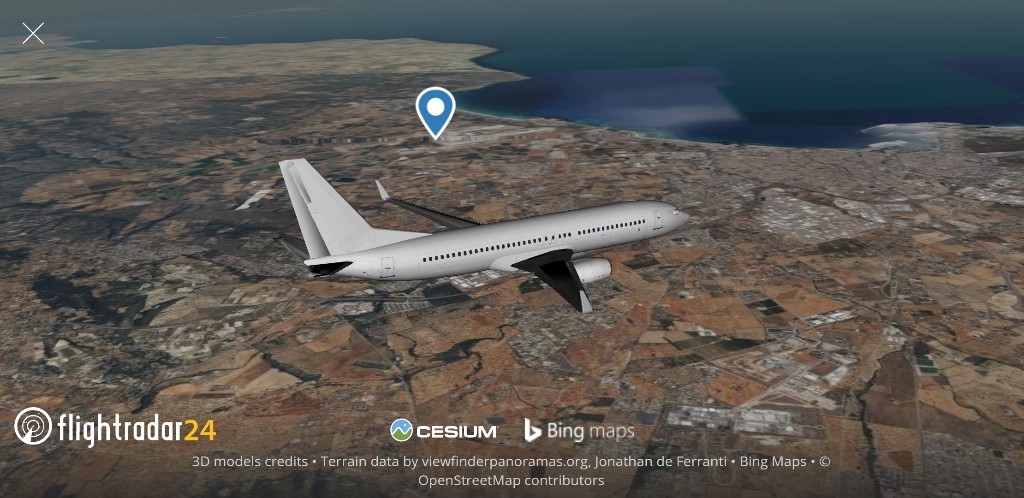
Earlier in the year I wrote about how I tend to live vicariously through my friends’ adventures and experiences. There was a fun example of this in September when my friend Louise travelled abroad on holiday. She was delighted when I offered to follow her flight in real-time. The image I’ve chosen is a screenshot from the Flightradar24 app as her plane approached Palma de Mallorca airport in Mallorca, Spain.

It was Louise’s month because she also got a mention in my blog post Six Times I Felt Proud This Week, in which I shared occasions I’d felt pride in myself or in other people. Way to go, Lou!


October

The photo I’ve chosen is one of hundreds I’ve taken over the years of this specific view close to where I live. I began doing so to share the moment with Fran as I set out into my day. In time, it became a valued part of our connection; something we both looked forward to. This all changed in May 2021, when one tree — our tree, as Fran and I had come to think of it — was cut down with no warning and for no apparent reason. Had it still been standing, it would fill the centre of the photo I’ve shared here. Fran and I felt the loss deeply. I gathered together all the photos I’d taken, intending to do something creative with them by way of a tribute when the time felt right.

Sadly, it felt right in October this year, following the senseless — and illegal — felling of the famous tree at Sycamore Gap beside Hadrian’s Wall in Northumberland. I’d never visited the site, but I knew it well through the work of other photographers and artists. It achieved International attention in 1991 when it featured in the Kevin Costner movie Robin Hood: Prince of Thieves. The culprit or culprits have yet to be brought to justice, but the desecration of such an iconic tree led me to explore my response to the destruction of our tree in a post I titled Of Fellings and Feelings: An Exploration of Loss and Renewal. As I wrote there, “I’m still learning about the gap that was left when the tree close to my home was felled,” but it gave me the chance to share a few of the many photographs I’d taken of it over the years.

I’ll briefly mention another article I published during October. Communicate or Hide? The Creative Dilemma was inspired by a quotation by Donald Woods Winnicott: “Artists are people driven by the tension between the desire to communicate and the desire to hide.” It allowed me to examine my reasons for writing, topics I’m at ease writing about, and those I’ve previously chosen not to explore, or have actively hidden from others — and in some cases myself. It’s a topic that strikes at the essence of my identity as a writer. As I wrote in that article, I do no one any good, myself included, by hiding away the dark bits, or hiding from them.


November

When it comes to writing with honesty and integrity, there’s no one I respect more than my friend and fellow mental health blogger Aimee Wilson. I was proud and happy to attend the publication party for Aimee’s latest book, You’re NOT Disordered: The Ultimate Wellbeing Guide for Bloggers, for which I wrote the foreword. Great or small it’s a delight to celebrate friends’ achievements, and this was a big one. Well done, Aimee!

This year marked my having achieved thirty years continuous service at my place of work. It didn’t seem all that much of an achievement to me, more a case of never having sought alternative employment in all that time. It led me to examine how I feel at this stage in my life in a post titled Getting a Living, Forgetting to Live: A Few Thoughts on My 30 Years Service. As I wrote there, “[t]hese thirty years passed almost without me noticing. I doubt I’ll be graced with another thirty. Twenty, maybe. What do I want to achieve? How do I want to live?”


December

This photo was taken at 6:30 am one Wednesday morning as I made my way to work. As I mentioned earlier, all year I’ve worked two days a week in the office, and three days from home. There are indications this may change next year, possibly reversing the pattern so it’s three days in the office and two working from home. I’m not keen, but it won’t be a problem if it happens. Views like this definitely make the early starts worthwhile.

The blog post I’ve chosen to highlight is Present and Correct: How to Do the Right Thing at the Right Time. It was inspired by a conversation with Fran about when’s the right time to open Christmas presents. More generally, it’s about recognising that we all have our ideas about when things should happen.

So, whether it’s opening Christmas presents, spending time with a friend, or taking a significant life decision, being conscious of our needs helps us make the most of the current moment. It’s arguably the greatest gift of all.

And that, my friends, is why they call it the present.


Post of the Year

This has been a year in which I’ve thought a lot about who I am, how I present to others, and what my purpose in life might be. Spending a little money on new t-shirts — and rather a lot of money on new glasses — was an important part of that journey. Not the money as such, although it’s nice to treat oneself now and again, but the way these things have allowed me to explore new ways of expressing my identity. This photo of me wearing my LIFE IS SHORT BLOG MORE t-shirt was taken at Starbucks in Newcastle International Airport, and is my favourite selfie of the year. I hope to carry that confidence and sense of who I am forward into 2024.

Realising I’ve spent the past thirty years in the same employ led me to ponder what I’ve done with my life and still want to achieve. In doing so I chanced on the Absurdist philosophy of Albert Camus, with its emphasis on finding personal meaning and purpose in the absence of any outside references. In One Must Imagine Sisyphus Happy: Encounters With the Absurd Man I described how and why I identify so closely with Camus on this. I also publically affirmed my lack of religious or spiritual belief for the first time. It’s an important article from my point of view, and one which takes me a few steps further on the path to writing — and living — authentically. For that reason, I’ve chosen it as my keynote blog post of the year. I feel it’s something I will be returning to again.

I’d like to close by saying a huge thank you to all our readers, and to everyone who has contributed, helped, or supported us and our blog in the past year. Fran and I are immensely grateful to you all.

Here’s to 2024, whatever it may bring.


All photos by Martin Baker.